
Draw and count
The pattern begins as a plan for the warp. Its proportions are translated into counted groups of thread, so the design can exist before weaving begins.
The craft
True ikat is resist-dyed in the threads, then brought into focus at the loom. Five linked stages give it depth, motion and an edge no printer can imitate.
Abrband means “cloud binding”—a fitting name for a pattern whose edges seem to breathe.
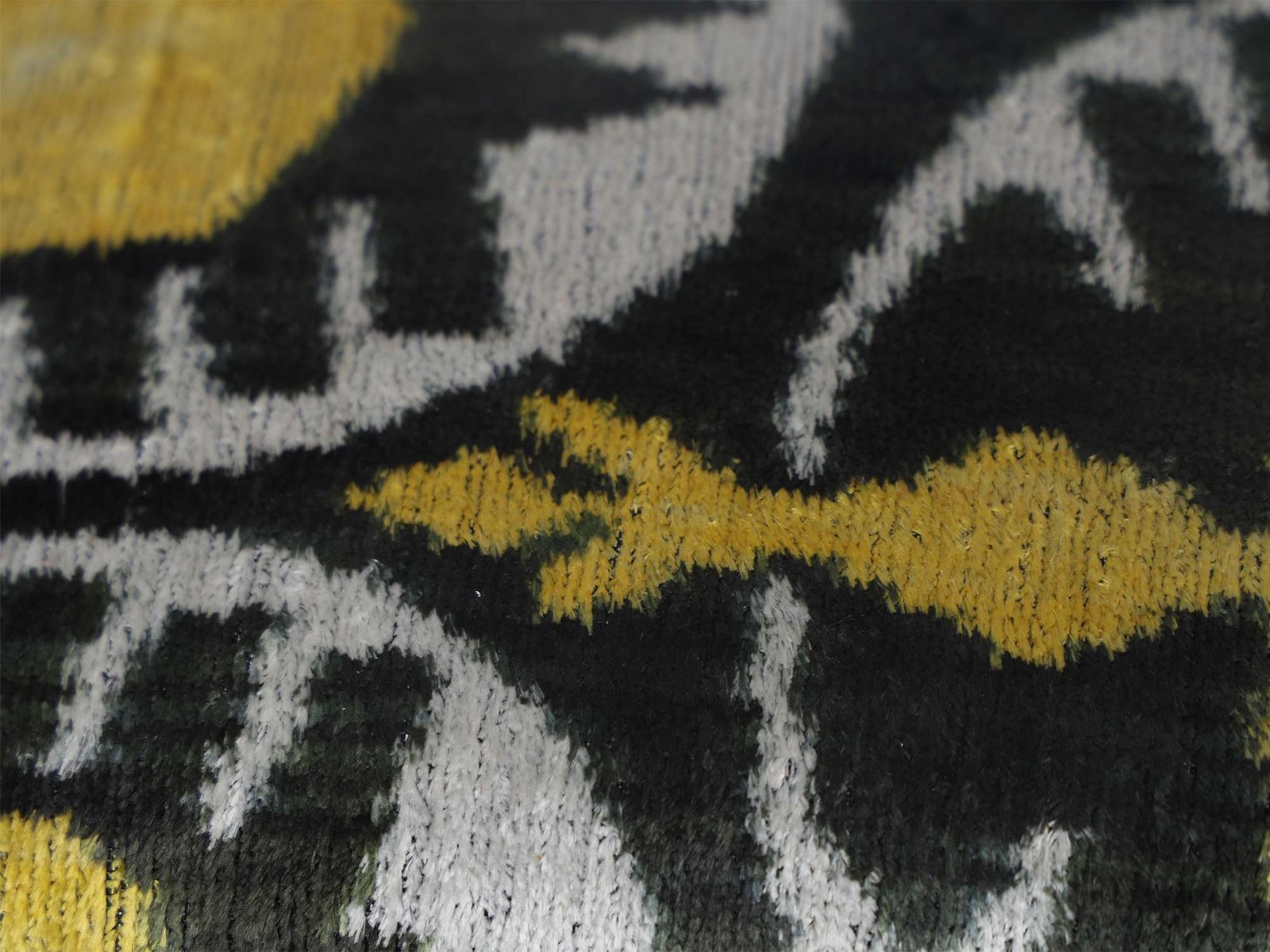
Five stages
Each stage depends on the one before it. A decision in binding can only be judged when the cloth finally leaves the loom.
The pattern begins as a plan for the warp. Its proportions are translated into counted groups of thread, so the design can exist before weaving begins.
An abrband master tightly wraps selected sections of thread. Every binding resists dye and preserves the next layer of the pattern.
The warp moves through repeated cycles of dyeing, drying, unbinding and rebinding. Indigo, madder-like reds and warm yellows build color from light to dark.
Dyed threads are stretched and adjusted by eye. Tiny shifts between neighboring threads create ikat’s characteristic softened edge.
The weft locks the image into place, line after line. Only now does the whole motif become visible as fabric.
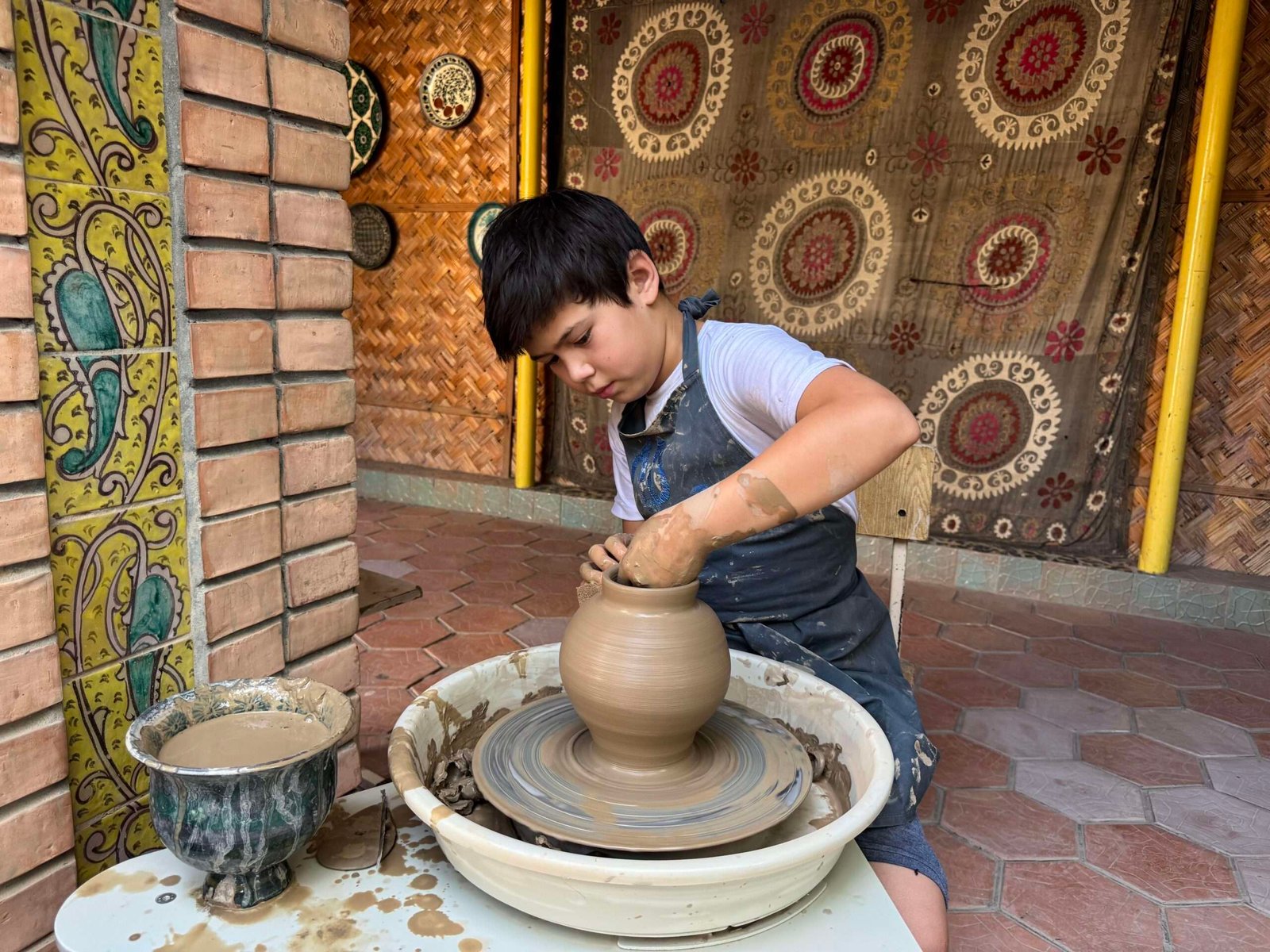
The beautiful blur
Changes in tension, dye and alignment are part of the process. They are why two lengths made from the same plan will still never be identical.
See finished pieces